
How we work
How we work
A drone operation starts long before take-off. This is the process we follow on every project.
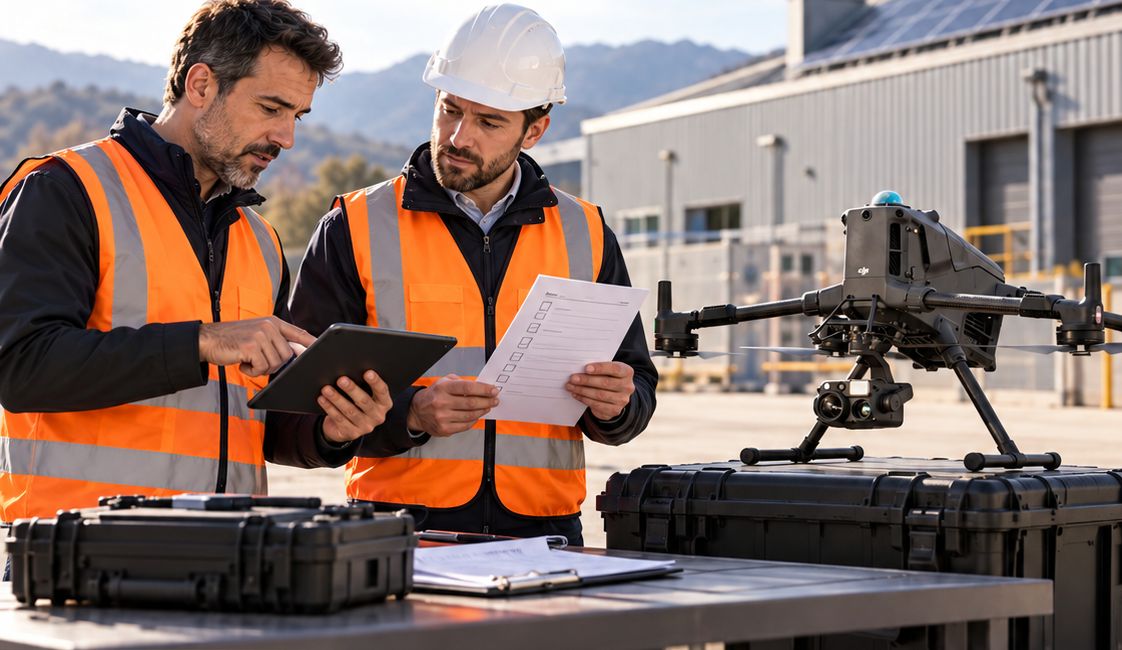
We understand the need
We gather the location, asset type, objective and any available documentation.
We assess feasibility
We review access, surroundings, constraints and technical scope.
We define the proposal
We agree on the service, deliverables, schedule and price.
We plan and carry out the work
We coordinate the operation with the client and the site conditions.
We deliver the information
We provide the agreed material and reports, with the option of ongoing monitoring.
Deliverables are defined for each service in the proposal. Not every service includes every format in the catalogue.
Safety and planning
Specific practices we apply to every operation.
Advance planning
Every operation is prepared before we go on site.
Risk assessment
We identify the specific risks of the activity and the site.
Site review
We check access, obstacles, people on site and restrictions.
Coordination with the client
We agree times, areas and measures with the person responsible for the site.
Weather conditions
If conditions are not suitable, the operation is rescheduled.
Working method
We choose the method and equipment according to the asset and the objective.
Water and products
We use them according to compatibility with the asset and technical documentation.
No climbing onto roofs
We work from the air: our team does not go up onto roofs.
Before you hire
Before you hire a drone, assess the service.
Careful procurement avoids surprises. These are the points worth checking with any provider, including us.
Flight operations
Operational category, pilot and the authorisations the site requires.
Prevention
Risk assessment and coordination with activity on site.
Insurance
Third-party liability cover suited to the operation.
Product and method
Compatibility of water, products and method with the asset.
Documentation
Deliverables and reports agreed in writing before work starts.
Each proposal sets out how we address these points for your project.
What affects the price
We prepare tailored quotes. The price depends on factors including:
- Location
- Size and characteristics of the asset
- Objective of the service
- Surroundings and access
- Operating conditions
- Equipment required
- Frequency of visits
- Processing and deliverables
Frequently asked questions
Which areas do you cover?
We work mainly in Catalonia, especially Barcelona and the surrounding area. We consider other locations depending on the project.
What information do you need to prepare a quote?
The location, the type of facility or asset, its approximate size, what you want to find out or solve and, if you have them, drawings, photos or previous reports. With this we assess feasibility and scope.
Can you work at any facility?
Not always. Feasibility depends on the location, surroundings, access, airspace restrictions and the characteristics of the asset. We assess this for each project before making a proposal.
Does the site need to stop operating?
It depends on the work. Often we can operate by coordinating times and areas, but sometimes areas need to be cordoned off or activity adjusted. We agree this with you during planning.
What happens if the weather is not suitable?
If wind, rain or other conditions prevent safe operation or reliable data, the operation is postponed and rescheduled with you. For thermal imaging, irradiance and temperature also matter.
What do we receive after an inspection?
The material and reports agreed in the proposal: for example, visual and thermal images, the location of areas to check and observations to guide maintenance. Deliverables are defined for each service.
Do you offer regular monitoring?
Yes. We can plan visits at the frequency you need, for example for solar installations, roofs or construction sites.
Can inspection and cleaning be combined?
Yes, where the installation allows it. An inspection beforehand helps document the condition of the modules and plan the cleaning, and one afterwards allows a comparison.
Can thermal imaging tell us the exact cause of any fault?
No. Thermal imaging shows temperature differences that may indicate an anomaly. These need to be interpreted and, where appropriate, followed up with further checks to determine the cause.
What affects whether drones can be used at a location?
Airspace rules, proximity to airports or restricted zones, people on site, the urban setting, the permits required and site conditions. We review these before every operation.
Let’s talk about your facility
Tell us what you need. We will review feasibility and send you a tailored proposal.